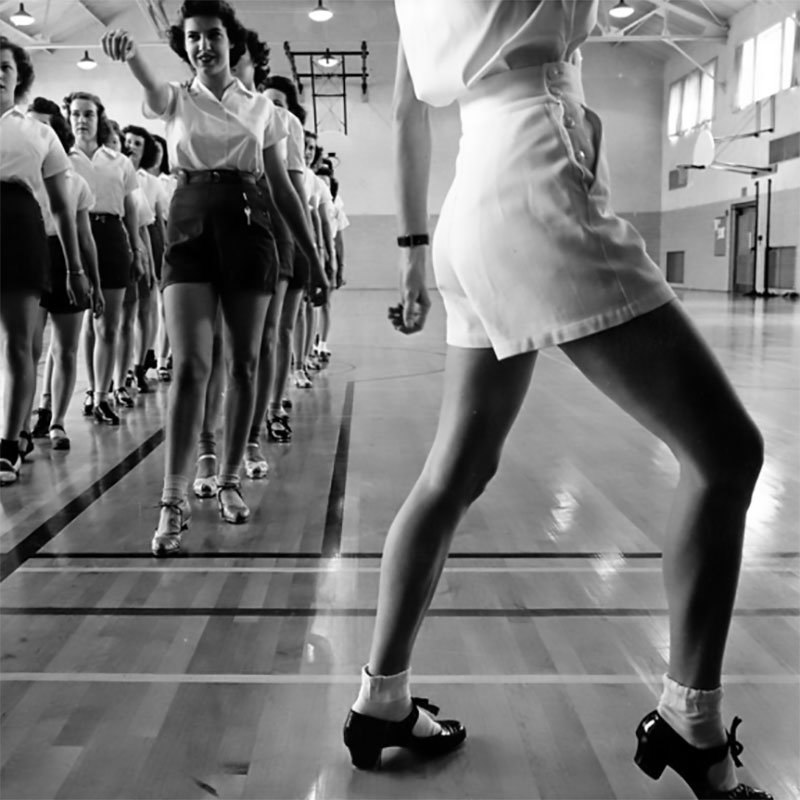
As the 20th century dawned, women’s fitness quietly began to shift from elite novelty to a more public and socially visible endeavour. The early decades broke with many of the rigid conventions that had long constrained female movement — but progress was never straightforward, and the anxieties around gender, health and propriety remained ever present.
In the first decades of the 1900s, traditional notions of femininity still held firm: women were often discouraged from strenuous activity on the grounds of delicate constitutions and reproductive “fragility.” But undercurrents of change were already apparent. Some educators and reformers began to question the assumptions underpinning those old taboos.
By the 1920s, a shift in aesthetics helped accelerate changing attitudes: the new “modern woman” ideal favoured a slender, more athletic silhouette — a noticeable departure from the corseted curves of the previous century. Fitness became intertwined with ideas of youth, liberation and self-control, rather than merely a tool for posture or genteel grace.
The single most significant milestone in this period came in 1930, when Women’s League of Health & Beauty (WLHB) was founded by Mary Bagot Stack in London. What began as small private classes quickly blossomed into a nationwide movement offering exercise to women across classes. By the mid-1930s, the League had expanded beyond London into cities across Britain — classes for factory workers, shop girls, housewives and the comfort-class alike.
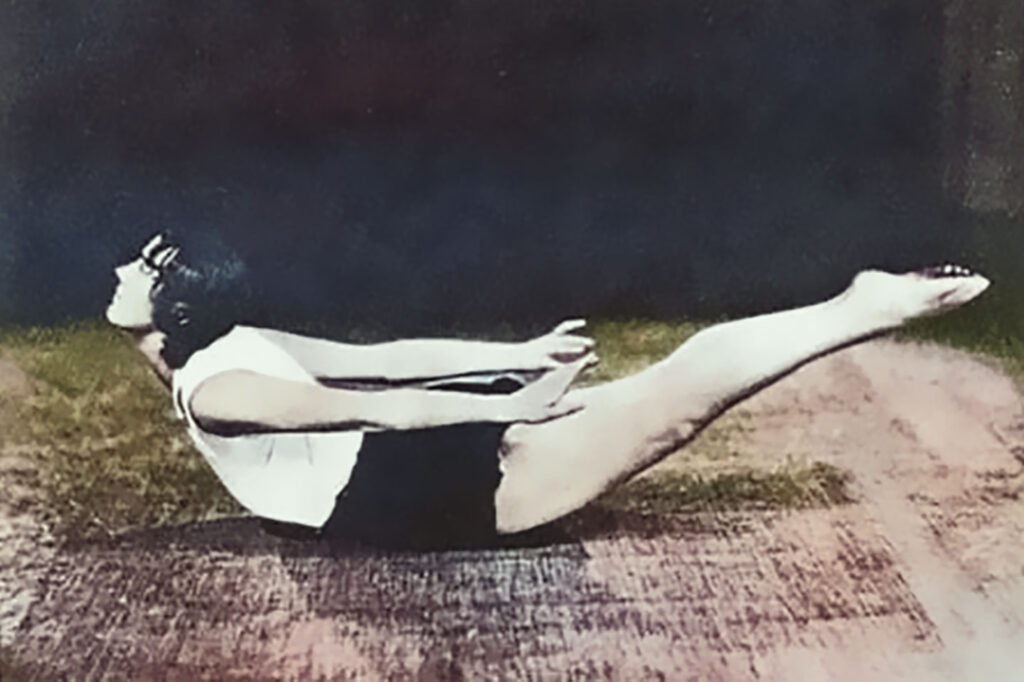
The exercises themselves were a mixture of calisthenics, rhythmic movement, dance-influenced sequences, and early forms of what today might be recognised as holistic or functional training. The emphasis was on flexibility, posture, grace and general health rather than muscular bulk — in part reflecting prevailing ideas about femininity and appropriate female form.
The League’s motto, “Movement is life,” captured more than a health slogan — it spoke to a broader social vision. For many women, WLHB offered a rare space for autonomy, community, and bodily agency at a time when women’s lives remained heavily constrained by class and gender expectations.
The interwar years saw fitness increasingly blend with cultural trends. Dance, rhythmic exercises and even early yoga-style movement became part of women’s fitness routines — fitting neatly with contemporary tastes for health, beauty and social modernity.
In some quarters, the redefinition of female fitness sparked controversy. While some celebrated the newfound freedom of movement, others criticised the shift — viewing muscular women or those who dared to defy gender norms as unfeminine or even threatening.
Still, through mass-market fitness, media-promoted beauty standards, and the growing reach of group exercise, the seeds were sown for a far more inclusive and diverse notion of women and physical culture — one that would only expand further in later decades.
By the end of the 1930s, the stage was set for a transformation. The concept that women could — and should — take charge of their physical health was gaining ground. The social experiment initiated by Mary Bagot Stack and her followers would influence how future generations approached fitness, exercise, and female autonomy. In that sense, the brief period between 1900 and the late 1930s was not just a transitional chapter — it was the prologue to the modern fitness era.